Streaming growth is slowing.
Live music is reaching affordability limits.
Fan spending fatigue is becoming increasingly visible.
Touring schedules are becoming crowded.
Independent and alternative touring models are gaining traction.
And the gap between superstar artists and everyone else continues to widen.
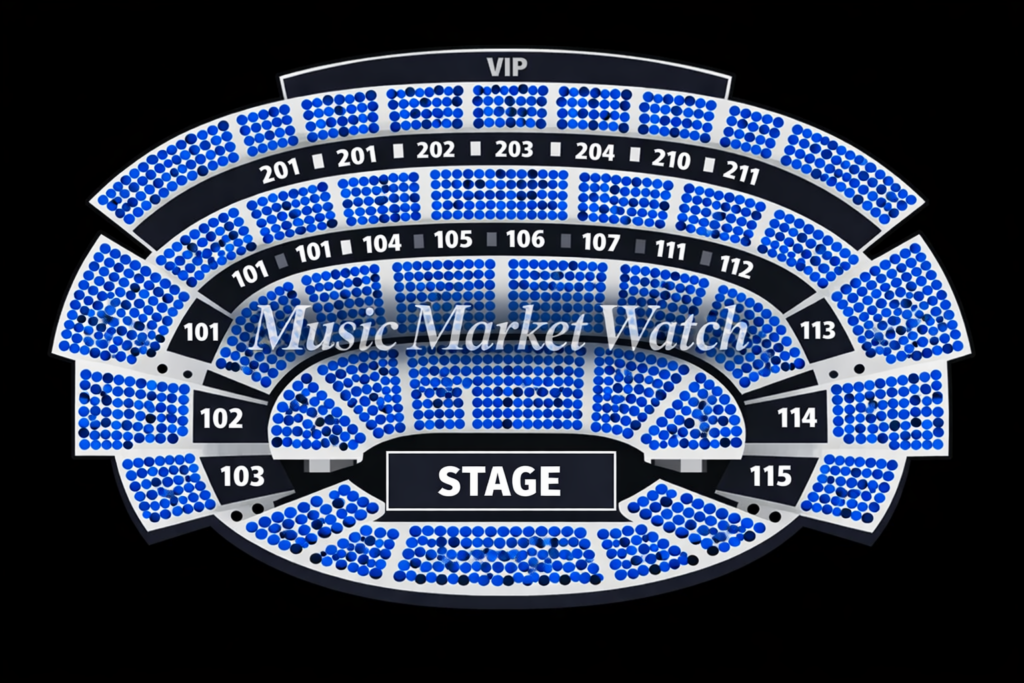
The term “Blue Dot Fever” is simply a catchy label for something industry insiders have been quietly watching for some time: visible unsold inventory.
Years ago, promoters could often hide weak ticket sales until much closer to show dates. Today, interactive seating maps expose demand in real time. Fans can literally see hundreds or thousands of unsold seats represented by blue dots across ticketing platforms.
What’s interesting isn’t the blue dots themselves.
It’s what they reveal.
Consumers are becoming more selective about where they spend their entertainment dollars. Higher food costs, higher travel costs, subscription fatigue, and economic uncertainty are all contributing to fewer impulse ticket purchases.
At the same time, the post-pandemic touring boom created a surge in supply. Major artists, legacy acts, reunion tours, festivals, and emerging artists all returned to the road, creating more competition for the same pool of fans.
Ticket pricing may also be encountering resistance. Fans still value live experiences, but many are becoming more strategic in their purchasing decisions. A consumer may still love an artist and simply decide to attend the next tour instead. Multiplied across thousands of fans, that decision can leave a venue filled with blue dots.
What Music Market Watch finds most interesting is that mainstream media outlets are only now beginning to package these trends into consumer-friendly narratives. That often signals an issue has moved beyond trade publications and become visible to the broader public.
The conversation is shifting.
Not:
“Why aren’t ticket sales growing?”
But:
“Is the live music business model changing?”
While blue dots may not signal the end of live music demand, they do suggest the industry is entering a period of adjustment. Artists, promoters, and platforms may need to rethink pricing, touring strategies, and fan engagement as audiences become increasingly selective about where they spend their time and money. For Music Market Watch, the most important trend is not the unsold seat itself, but the market forces creating it.